
 Claude
 ChatGPT
 Gemini
 Grok
 Copilot
 Perplexity
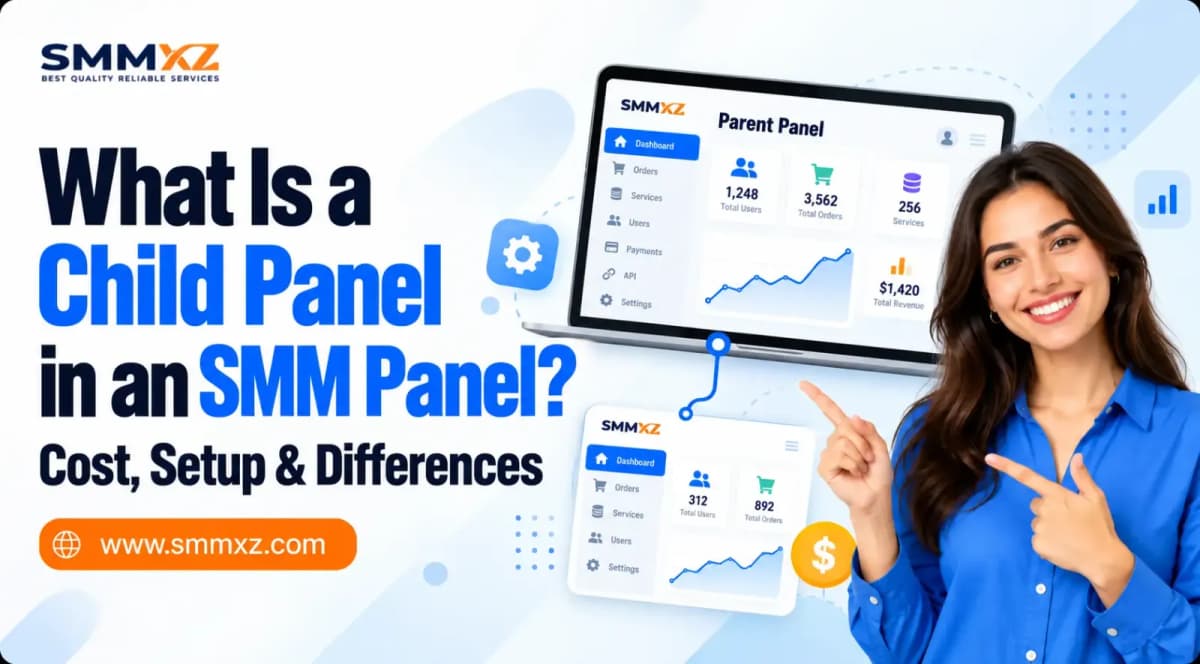
A child panel is a ready-made website for selling social media services under your own brand. It uses a larger provider's system to process orders, so you can focus on pricing, customers, and support instead of building software. This guide explains how it works, how it differs from an independent setup, what it costs, and what to check before buying one.
What Is a Child Panel?
A child panel is a reseller storefront with its own domain, logo, service list, and customers. It is connected to a main provider supplying SMM services. The site is a branded website rather than an independent delivery network: customers see your brand, but the provider processes their requests behind the scenes.
Think of a small shop buying stock from a wholesaler. The shop sets prices; the wholesaler supplies products. The same arrangement can apply to social media marketing, where the products might be post views, likes, or followers. Businesses can offer services under their own brand, but higher numbers do not prove genuine interest.
How a Child Panel Works with the Main Panel
Customers select a service, enter the required public post or profile link, choose a quantity, and place an order. The storefront forwards each request to the connected provider, which handles fulfillment directly or through its delivery partners. When the child panel is linked correctly, order information can move between the two systems without someone re-entering every order manually.
The process also involves two balances. The customer pays the retail price you set on your website. You pay the parent panel's wholesale charge, usually through a prepaid balance. A customer payment might not reach that provider automatically. If the balance runs low, paid orders may remain pending.
Order updates are another part of the connection. A request might show as pending, processing, completed, partial, or canceled. The dashboard should make those changes visible to you and the customer. Ask about the average time for updates and how partial orders are handled.
Child Panel vs Regular Panel: What Are the Main Differences?
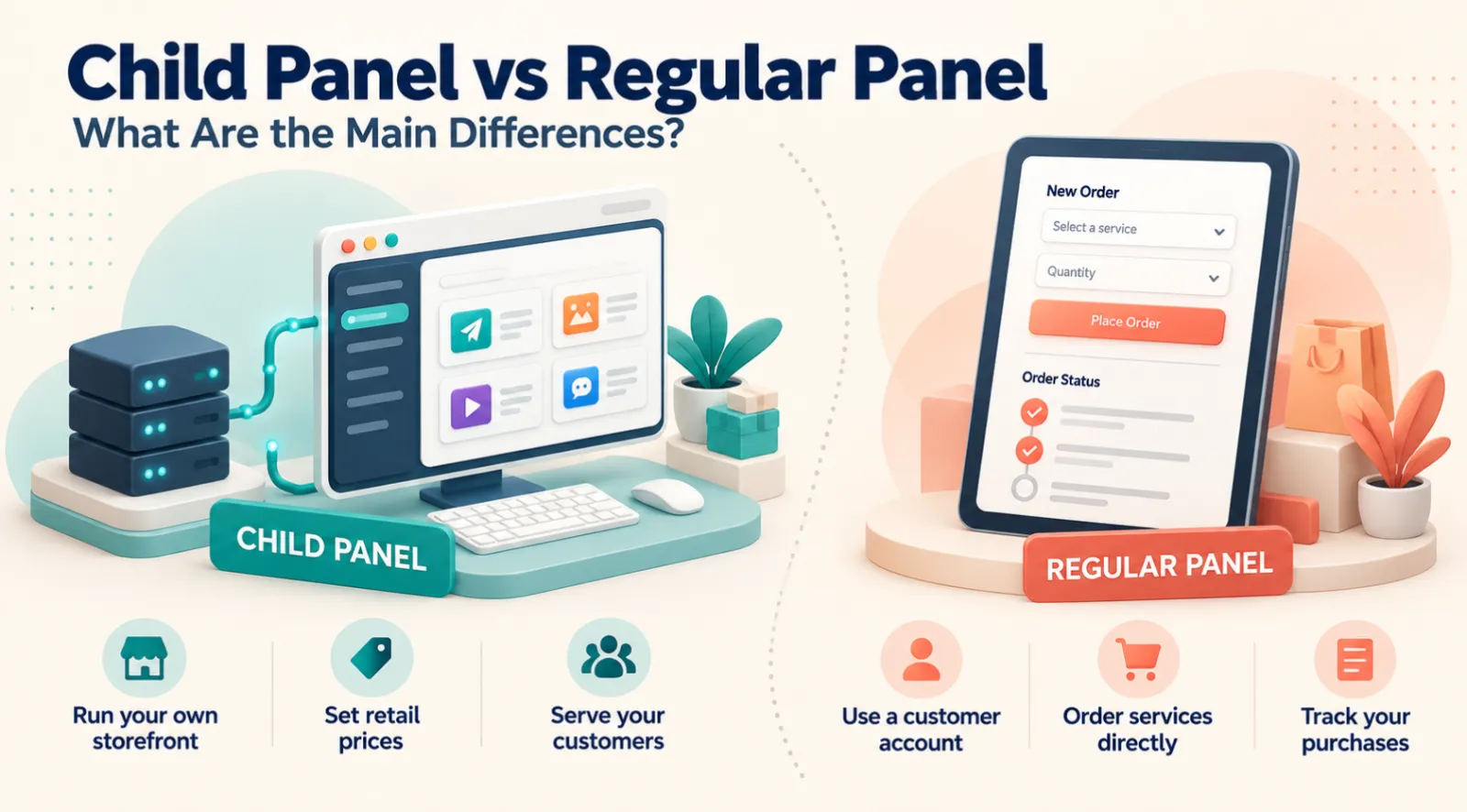
Regular panels and child panels may look alike from the outside, but the first major difference is control. The owner of a regular panel may choose multiple providers, software modules, and delivery arrangements. A hosted child site generally uses one provider as its direct source. The regular panel that a child storefront depends on may still connect to several service sources in the background. A child panel vs main panel comparison is therefore about who controls the storefront and who controls fulfillment.
The second significant difference is cost and maintenance. The owner of the regular panel handles software, updates, and service testing. A hosted business often pays a fee while the provider maintains the core system. That can mean maintenance is cheaper, although fees add up over time. How do hosted options differ from regular SMM panel software? In control, responsibility, and provider choice.
| Feature | Independent regular panel | Hosted child storefront |
|---|---|---|
| Service providers | May connect several | Usually linked to a single parent |
| Branding | Broad control, depending on software | Custom domain and branding within plan limits |
| Technical setup | Software and integrations need attention | Often prepared by the provider |
| Customer support | Handled by the business | Handled by the business |
| Running costs | Hosting, software, support, integrations | Setup or monthly plan plus operating costs |
| Best fit | Teams wanting more technical control | Beginners testing a branded service |
Child Panel vs Reseller API: Which One Should You Use?
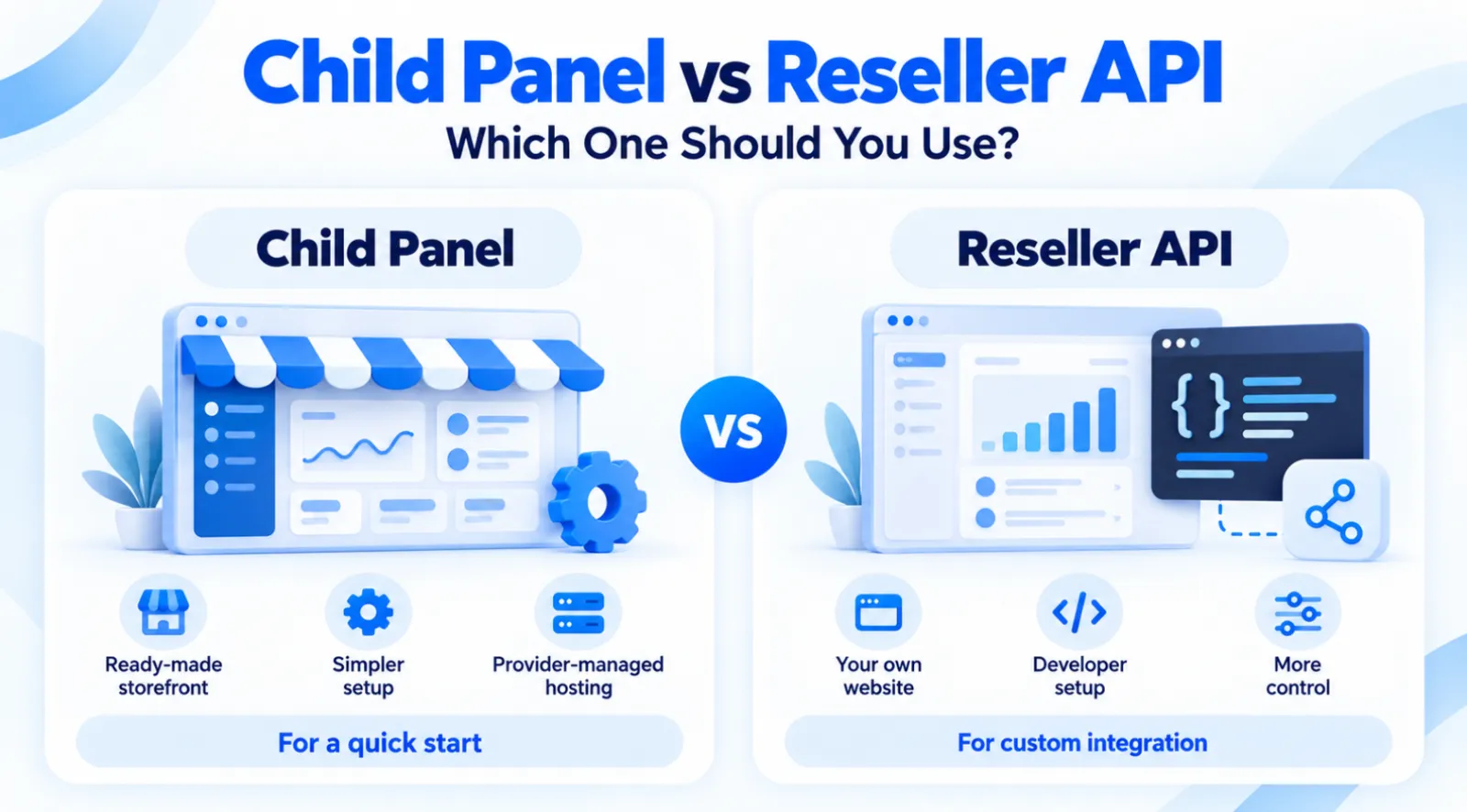
These two approaches can use the same service source, but they solve different problems. A ready-made storefront includes the customer-facing site. A direct integration connects an existing website to the provider. Existing software may make direct integration more flexible. If you are starting without a website, the hosted option can remove much of the development work.
With a managed setup, a provider may connect the panel by API and give you an API key or handle the connection internally. You should not share your account username and password with an unverified third party. Also ask whether an admin API is included, because it is different from ordinary order submission access. The answer affects which settings and reports you can manage yourself.
Neither option makes an operation risk-free. You still need clear pricing, payments, and support. Choose based on technical ability and what you want to manage, not the promise that one method will automatically attract customers.
What Features Does a Child Panel Dashboard Offer?
A typical child panel offers customer accounts, a branded panel storefront, service categories, pricing, and an order dashboard. The admin can often edit basic site content and review payments or order histories. Others add custom headers, notifications, coupons, and reports. Always check a live demo because features change between packages.
Order details can be especially important. Panel services should show minimum and maximum quantities, estimated start times, cancellation conditions, and any order refill rules. A refill replaces eligible drops within stated conditions, not unlimited replacements. Some packages offer subscriptions and order refill options, while others offer neither. Check whether the conditions apply to the exact service you plan to sell.
How panels work can differ by vendor. Check vague technical claims. The claim that a platform is unlimited may hide a monthly orders limit, service restrictions, or additional charges. A seller might describe its system as way more functional without explaining the difference. Ask what start count parsing or free balance means in that plan. Confirm which parts of the panel's interface and the panel’s data you can export.
What Do You Need to Start an SMM Business with a Child Panel?
To launch this business using a hosted storefront, you generally need a domain name, a provider account, an initial deposit, a logo, and a payment method your customers can use. The provider usually connects your domain through DNS changes and sets up the storefront. Also prepare contact details and refund terms. Some providers charge a one-time setup fee, while others require a recurring subscription.
Before you buy a child panel, confirm domain ownership, data access, and cancellation rights in writing. Ask whether the seller can launch the platform right away or requires several setup steps. A promise to create a new panel absolutely for free may exclude hosting, service deposits, or future charges. Likewise, ‘don’t charge extra’ may apply only to specific features, not every payment or update.
Then add funds and place a small test order. Make sure customer orders appear correctly, charges match the listed wholesale rates, and status messages reach panel users. Read the user agreement and privacy policy before allowing customers to register.
How Much Does a Child Panel Cost?
Child panel costs depend on the provider, plan, domain, and billing model. Some charge a fixed setup price; others use a monthly fee. You may also pay for payment processing, customer support, software extras, and marketing. A low advertised rate is not the same as the total cost of operating the store. Compare managed and full panel costs over several months.
For a simple example, assume the website plan costs $20 per month and average domain or software expenses add $10. That makes fixed monthly costs $30, before wholesale purchases, advertising, payment fees, and refunds. This is a sample budget, not a live price quote. Regular panels cost more to launch in some situations, but a hosted plan can become expensive if fees rise or you need paid features.
How Does a Child Panel Owner Make Money?
The business earns through the difference between your price and the provider's cost. Suppose an order costs $1.20 from the parent and your customer pays $2.00. The gross profit is $0.80. If you handle 100 similar orders, the gross profit would be $80 before transaction charges, refunds, advertising, support, and the website plan. Gross and net profit are different.
There is no guaranteed margin. A supplier can change its rates, cancel a service, or deliver only part of an order. Review prices regularly so a service does not sell at a loss. If you later become an SMM panel owner with your own independent software, you may have more control over sourcing, but you would also take on more operating work.
How Do You Set Up and Test a New Panel?
Begin by comparing providers on support quality, service availability, domain control, and clear policies. Ask for a demo. An established parent may also sell child panels to other businesses, but that does not prove its own delivery quality. If the seller invites you to resell your services, confirm whether it means direct sales, a wholesale arrangement, or an affiliate program.
Next, connect the domain, add your branding, choose the services you want, and set prices based on actual wholesale charges. The panel that a child panel uses should provide clear updates and support. Record who is responsible for partial orders, refunds, and customer complaints. If someone says you can connect as many providers as you like, ask whether that feature truly exists in your plan.
Finally, test the complete order journey on mobile and desktop. Register an account, check the checkout, verify the parent balance deduction, and review notifications. Avoid using someone else's credentials. Measure delivery estimates over several legitimate test orders and update your service information when conditions change. A working storefront is only a starting point; attracting customers and keeping accurate records take ongoing effort.
What Are the Benefits and Risks of a Hosted Child Panel?
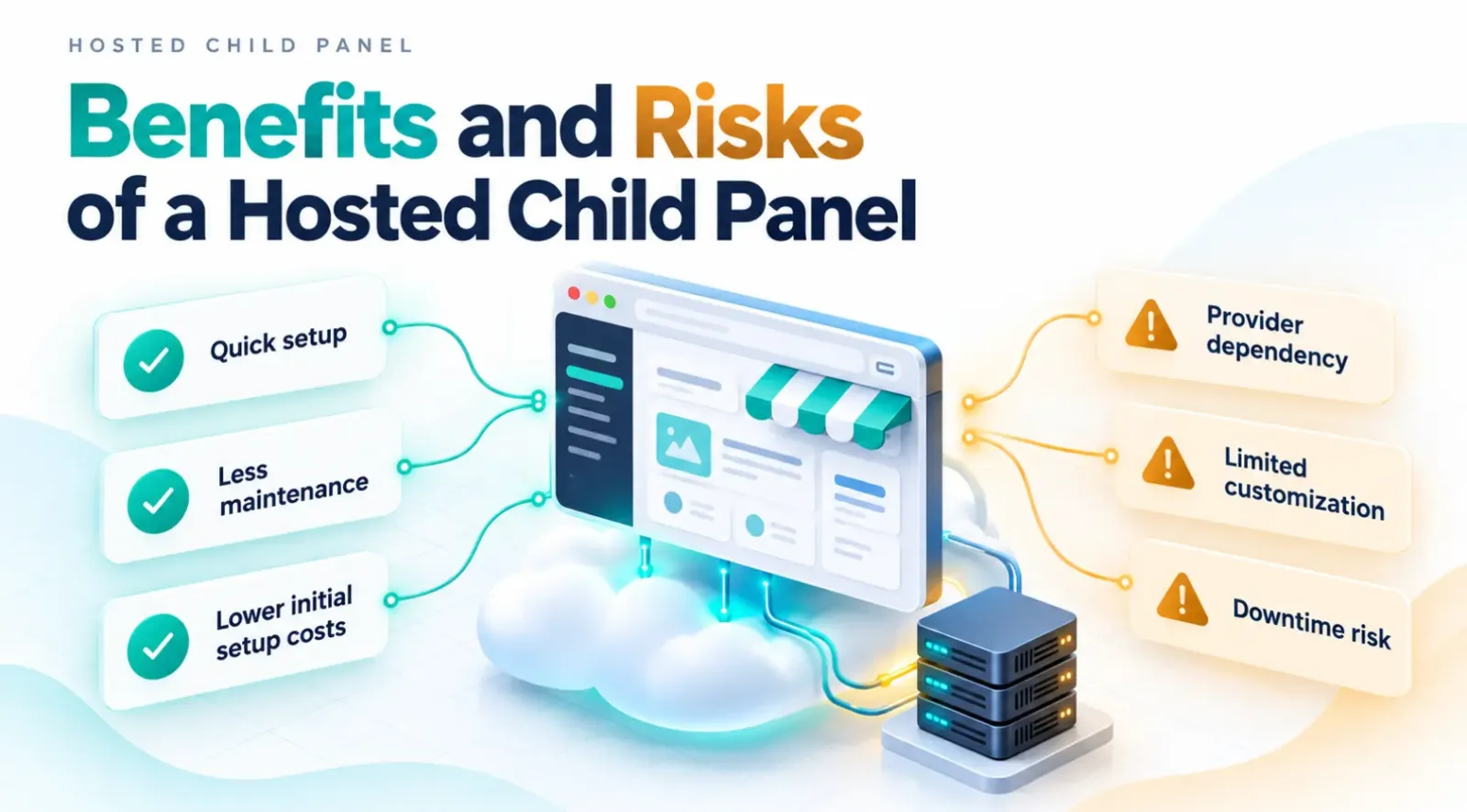
The biggest benefit is a simpler route into the SMM market. You get a branded website without building a full ordering platform. An SMM panel that runs on its provider's infrastructure can also save time on software updates. The child panel gives you space to concentrate on pricing, service explanations, and support. Convenience does not guarantee profit.
The biggest limitation is dependence on the parent's operations. If the upstream provider experiences an outage, removes a service, or changes prices, you may have to adjust your offers immediately. Check the parent's refund terms, security practices, access permissions, and data-export policy. A customer's order may be affected even when your own storefront is working normally.
Be careful with claims about guaranteed followers, genuine engagement, or permanent results. Some services may conflict with social platform rules. Avoid misleading customers about where engagement comes from, what results mean, or whether replacements are available. Publish clear support, cancellation, and privacy information.
Frequently Asked Questions (FAQ) About Child Panels
Can I use my own branding and domain?
Usually yes. A hosted package often supports a custom domain and logo. Check that you control the registration and can move the domain later. Template customization may be limited.
Can I set my own prices?
In most hosted arrangements, yes. You choose a retail markup, but the provider controls wholesale charges and may apply certain restrictions. Monitor price changes to protect margins.
Can I run the business without coding skills?
Usually. Managed plans provide the storefront and basic connection. You still need to understand payment settings, product descriptions, customer support, and the provider's account rules.
Does a child site work without its provider?
Usually not for fulfillment. The storefront may remain visible, but new orders cannot reliably proceed when the upstream system is unavailable. Ask what happens during outages and how requests recover.
Can I connect multiple providers?
Not always. Many hosted packages connect directly to only one upstream system. Some independent software products allow multiple sources, so compare the actual integrations before making a decision.
Is a hosted site better than an independent platform?
It depends on your budget, technical skills, and need for control. A hosted site can be simpler for an early-stage business; independent software may suit someone who wants greater control over providers.
What should I check before paying?
Review setup costs, monthly fees, domain ownership, customer-data access, support hours, service conditions, and exit rights. Ask for the details in writing and test the service before spending heavily.
Conclusion
A child panel can be a practical option for starting a branded SMM business without developing an independent platform. It allows you to manage customers, set retail prices, and offer services through a website connected to a larger provider. However, the business still depends on that provider for order processing, service availability, and delivery.
Before choosing a provider, compare setup costs, monthly fees, available features, payment options, and customer support. Make sure you understand the risks, test the ordering process, and calculate your operating expenses. A reliable setup and clear service information can help you manage your business more effectively.